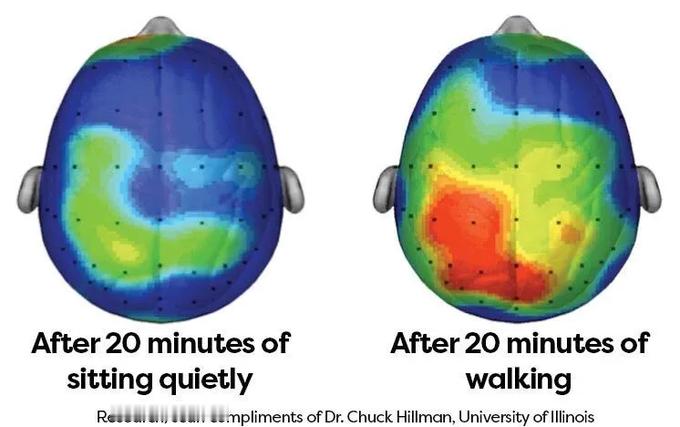
🚨步行二十分钟即可触发大脑的可测量重塑。
这一时间范围应该让每一个被束缚在办公桌前的人感到恐惧。二十分钟。不是二十天,不是二十周。在一部电视剧单集的时长内,你的大脑就开始在细胞层面物理性地重构自身。
神经科学研究揭示,这种短暂的节奏性运动窗口会激活原本处于休眠状态的基因表达模式。在那二十分钟内,你的海马体开始制造新鲜神经元。你前额叶皮层开始强化突触连接。流向管理记忆和执行功能的区域的血流量增加15%至30%。
这一含义摧毁了你所有关于“没时间”的借口。
大多数人会花二十分钟刷社交媒体、看随机视频,或是坐在交通堵塞中。在同一时段内,他们本可以真正地在“生长”自己的大脑。机会成本令人震惊。你每保持静坐二十分钟,你的神经架构就停滞不变、老化、萎缩二十分钟。
研究人员追踪了那些进行二十分钟步行休息的办公室工作者,与那些保持坐姿的人相比。步行者显示出注意力持续时间、工作记忆和创造性问题解决能力的即时改善,这种改善在数小时后仍持续存在。他们的大脑产生更多α波,即与平静专注和洞察相关的电模式。坐着的人则在一天中显示出认知表现的持续下降。
二十分钟阈值揭示了人类神经生物学中某种深刻的东西。进化将我们的大脑布线为期待规律运动。我们的祖先在狩猎、觅食和迁徙时每天步行5至10英里。现代久坐生活方式是对塑造我们神经发展数百万年的运动模式的彻底背离。
当你步行二十分钟时,你不仅仅是在锻炼。你在激活构建人类智能的生物程序。节奏性步态模式会同步多个区域的大脑波。增加的氧气输送滋养了因长时间坐姿而饥饿的神经组织。运动的温和压力触发适应性反应,使你的大脑更具韧性。
心理学研究显示,二十分钟步行比冥想App、治疗会话或药物干预更有效地降低皮质醇水平。皮质醇,这种慢性压力激素,会萎缩海马体并损害记忆形成。步行不仅仅降低皮质醇。它逆转了高皮质醇引起的脑损伤。
研究发现,每天坐超过8小时的人显示出与早期痴呆患者相同的大脑模式。他们的海马体明显较小。他们的白质组织较松散。他们的处理速度每年以可测量的方式下降。
每天二十分钟步行可以预防并逆转这些变化。
研究表明,久坐行为不仅仅对你的心脏和肌肉有害。它是一种加速大脑老化的形式。你每小时不动,你的认知能力就会以随时间累积的方式退化。好消息是,这些变化并非永久的。大脑在整个生命中保留着惊人的可塑性。但你必须通过运动来激活这种可塑性。
硅谷高管们已开始在步行中进行会议。他们报告说决策更好、解决方案更有创意、思维更清晰。他们无意中重新发现了亚里士多德2400年前就知道的东西:最好的想法在身体移动、思维跟随时浮现。
你的大脑进化成在移动中思考。连续数小时静坐违反了人类认知的基本架构。你每迈出一步,都会通过神经系统发送电信号,传达:保持敏锐,建立连接,生成洞察。
二十分钟。这就是开始重塑数十年神经停滞所需的一切。
🚨Twenty minutes of walking triggers measurable brain rewiring.
That timeframe should terrify every person chained to a desk. Twenty minutes. Not twenty days, not twenty weeks. In the span of a single episode of a TV show, your brain begins physically restructuring itself at the cellular level.
Neuroscience research reveals that this brief window of rhythmic movement activates gene expression patterns that had been dormant. Within those twenty minutes, your hippocampus starts manufacturing fresh neurons. Your prefrontal cortex begins strengthening synaptic connections. Blood flow to regions governing memory and executive function increases by 15 to 30 percent.
The implications destroy every excuse you've ever made about not having time.
Most people spend twenty minutes scrolling social media, watching random videos, or sitting in traffic. During that same period, they could literally be growing their brain. The opportunity cost is staggering. Every twenty minute block you remain sedentary is a twenty minute block your neural architecture remains static, aging, shrinking.
Researchers tracked office workers who took twenty minute walking breaks versus those who remained seated. The walkers showed immediate improvements in attention span, working memory, and creative problem solving that persisted for hours afterward. Their brains generated more alpha waves, the electrical patterns associated with calm focus and insight. The sitters showed declining cognitive performance throughout the day.
The twenty minute threshold reveals something profound about human neurobiology. Evolution wired our brains to expect regular movement. Our ancestors walked 5 to 10 miles daily while hunting, foraging, and traveling. The modern sedentary lifestyle represents a radical departure from the movement patterns that shaped our neural development over millions of years.
When you walk for twenty minutes, you're not just exercising. You're activating the biological programs that built human intelligence. The rhythmic gait pattern synchronizes brain waves across multiple regions. The increased oxygen delivery feeds neural tissue that's been starved by prolonged sitting. The gentle stress of movement triggers adaptive responses that make your brain more resilient.
Psychology studies reveal that twenty minute walks reduce cortisol levels more effectively than meditation apps, therapy sessions, or pharmaceutical interventions. Cortisol, the chronic stress hormone, shrinks the hippocampus and impairs memory formation. Walking doesn't just lower cortisol. It reverses the brain damage that elevated cortisol causes.
It's found that people who sit for more than 8 hours daily show brain patterns identical to patients with early stage dementia. Their hippocampi are visibly smaller. Their white matter is less organized. Their processing speed declines measurably with each passing year.
Twenty minutes of daily walking can prevent and reverse these changes.
The research suggests that sedentary behavior isn't just bad for your heart and muscles. It's a form of accelerated brain aging. Every hour you spend immobile, your cognitive capacity degrades in ways that compound over time. The good news is that those changes aren't permanent. The brain retains remarkable plasticity throughout life. But you have to activate that plasticity through movement.
Silicon Valley executives have started conducting meetings while walking. They report better decisions, more creative solutions, and clearer thinking. They've accidentally rediscovered what Aristotle knew 2,400 years ago: the best ideas emerge when the body moves and the mind follows.
Your brain evolved to think while moving. Sitting still for hours violates the fundamental architecture of human cognition. Every step you take sends electrical signals through your nervous system that say: stay sharp, build connections, generate insights.
Twenty minutes. That's all it takes to begin rewiring decades of neural stagnation.